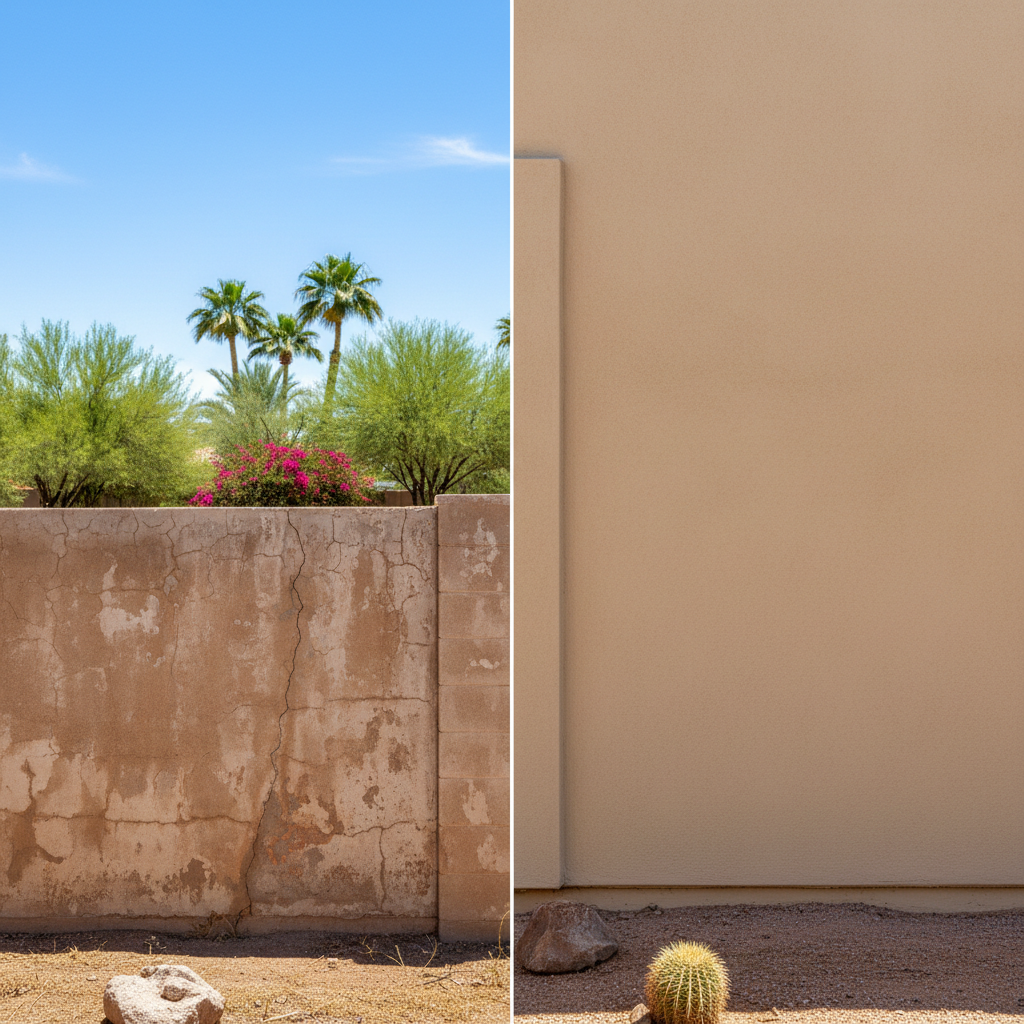
Alright, so you've got a stucco home here in Scottsdale, and it's time for a fresh coat. Maybe it's looking faded, or you're seeing some hairline cracks, or you just want a new color. Whatever the reason, you're probably wondering what kind of paint to use. It's not as simple as grabbing any old can off the shelf, especially with our desert climate. You've really got two main contenders: regular acrylic paint and elastomeric coating. Let's talk about what each one brings to the table.
Regular Acrylic Stucco Paint: The Standard Choice
When I say 'regular acrylic paint,' I'm talking about the kind of exterior paint most folks are familiar with. It's a good, solid option for many homes, and it's definitely the more common choice you'll see around neighborhoods like McCormick Ranch or Paradise Valley.
Cost
This is where acrylic paint usually wins out. It's less expensive per gallon than elastomeric coatings, and it generally takes less specialized prep work or application time. So, if your budget is tight, this is often the go-to.
Durability & Maintenance
A good quality acrylic paint will hold up pretty well. It'll resist fading from our intense Arizona sun for a decent stretch, and it's breathable, which is important for stucco. Breathability means moisture can escape from inside the walls, preventing issues like blistering or peeling. You'll likely get 7-10 years out of a quality acrylic paint job before it starts looking tired and needs repainting.
Appearance
Acrylic paints offer a huge range of colors and sheens. They give a nice, crisp finish that looks clean and fresh. They don't hide imperfections as well as elastomeric coatings, though. If you've got a lot of minor surface cracks, acrylic paint will just cover them, not bridge them.
Elastomeric Coatings: The Flexible Option
Now, elastomeric coatings are a different beast entirely. Think of them as a super-thick, super-flexible paint. They're designed specifically for masonry surfaces like stucco and concrete, and they're built to handle some serious punishment.
Cost
No two ways about it, elastomeric coatings are more expensive upfront. The material itself costs more, and the application can be a bit more involved. You're looking at a higher price tag per square foot, usually 20-50% more than a standard acrylic job.
Durability & Maintenance
This is where elastomeric really shines, especially in our climate. It forms a much thicker, more flexible film than regular paint. This flexibility is key because it allows the coating to stretch and bridge hairline cracks in the stucco – cracks that would just show right through regular paint. It's also incredibly resistant to water penetration, which is great for protecting your home from our monsoon downpours. You can expect 15-20 years, sometimes even more, from a properly applied elastomeric coating. It's also fantastic at resisting dirt pickup and fading.
Appearance
Elastomeric coatings tend to have a slightly thicker, more textured look than standard paint. They can sometimes appear a bit 'softer' or less crisp, but they do a fantastic job of evening out minor surface irregularities. If you've got an older stucco home with some minor imperfections, an elastomeric coating can make it look much smoother without having to do extensive patching first.
What I Recommend for Scottsdale Homes
Look, both options have their place. If you're on a strict budget, and your stucco is in really good shape with no cracking issues, a high-quality acrylic paint can absolutely work. You'll get a nice-looking finish for a solid number of years.
However, if you ask me, for most stucco homes here in Scottsdale, especially those that are a few years old or showing any signs of hairline cracking, I almost always lean towards an elastomeric coating. Our intense sun, the rapid temperature swings, and the occasional heavy rain are brutal on exterior surfaces. Elastomeric coatings are built for these conditions. They offer superior protection against moisture intrusion, they bridge those annoying hairline cracks, and they simply last longer, making them a better long-term investment.
Think about it: you pay more upfront, but you get double the lifespan and better protection for your home. You're saving yourself another repaint job a decade down the line, and you're protecting your stucco from potential water damage. For a place like Scottsdale where the ground can shift a little and stucco is constantly expanding and contracting with the heat, that flexibility is a huge advantage.
Here at Scottsdale Stucco & Plastering, we've seen countless homes benefit from the durability of elastomeric. It just makes sense for our desert environment. When you're ready to make a decision, get a few quotes, ask about the specific products they're using, and make sure whoever you hire knows their stuff about stucco and our local climate.