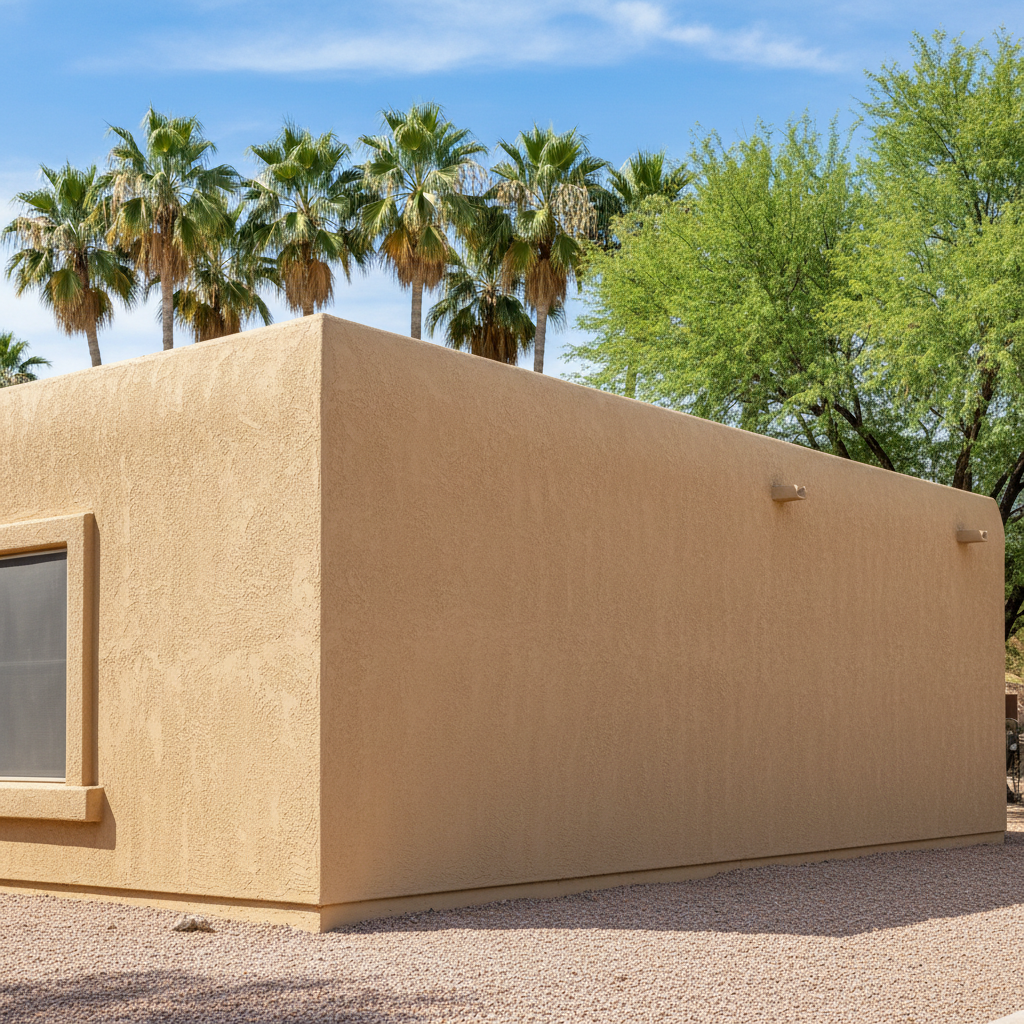
Some stucco jobs around McCormick Ranch start cracking after just a couple of summers while others hold up for 15 to 20 years or more. It usually comes down to timing and the brutal desert thermometer. Here in Scottsdale, the weather dictates everything we do on a job site. If you are planning a Stucco project, you cannot just pick a random week on the calendar and hope for the best.
High temperatures in the local climate do significant damage to cement plaster. During peak summer, surface temperatures on a west-facing wall can easily clear 140 degrees. When it is that hot, water evaporates out of wet Stucco too fast. The material does not cure properly; it just dries out, losing its structural strength and leading to shrinkage cracks before the finish coat even goes on.
When to Schedule Your Stucco Work
Fall through spring is prime time for exterior plastering in the Valley. Once temperatures drop out of the triple digits and hover in the 70s and 80s, we get the ideal window for proper curing. The Stucco needs moisture to set hard, and moderate weather lets us keep the walls wet long enough to achieve maximum durability.
Winter mornings in Scottsdale can bring a surprise frost in certain pockets near the McDowell Mountains. Freezing temperatures will ruin fresh wet Stucco instantly by expanding the water inside the mix. Scottsdale Stucco & Plastering always checks the overnight lows before scheduling a scratch coat or brown coat.
Year-Round Protection Strategies
Monsoon season brings its own set of headaches. High winds drive rain sideways against your walls, testing every seal around your windows and doors. If you spot hairline cracks after a heavy storm, do not wait until next year to patch them. Moisture gets behind the finish coat, and once it hits our alkaline caliche soil and heats up, it creates pressure that blows out chunks of Stucco.
- Inspect your exterior walls twice a year, right after monsoon season and again after winter.
- Keep sprinklers adjusted so they are not constantly soaking the base of your home, which causes efflorescence, that white powdery substance, and crumbling.
- Apply a breathable, high-grade acrylic or elastomeric coating to bridge micro-cracks and reflect UV rays.
Scottsdale Stucco & Plastering has repaired plenty of sun-baked walls that could have been saved with a little preventative maintenance and better initial timing. Keep an eye on your exterior, deal with small cracks before they turn into major structural repairs, and plan your next big Stucco project when the desert weather is actually on your side.